Selection, Validation and Data: The SIG Energy Technology Methodology
As summer approaches, SIG Energy Technology presents a summary of the key steps that guarantee our products' performance. From cell selection to laboratory validation, here is our approach.
1. The Right Chemistry for the Right Application
Technological choices are expanding beyond classic Lithium-Ion. Each project requires a precise trade-off depending on the chosen technology:
Lithium-Ion (NMC vs. LFP): NMC maximizes energy density for mobility, while LFP prioritizes safety and longevity for stationary storage.
Sodium-Ion: An economic alternative free of lithium and cobalt, offering excellent thermal tolerance but lower energy density.
Semi-Solid: A technology utilizing a gel to reduce the risk of thermal runaway.
2. Laboratory Characterization: Resistance Measurement and Intensive Cycling
Since manufacturers' datasheets are not enough to anticipate the real-world behavior of cells, our testing laboratory validates their performance to secure applications and configure BMS parameters:
Internal Resistance Monitoring: An indicator measured at every stage to evaluate aging and detect potential anomalies.
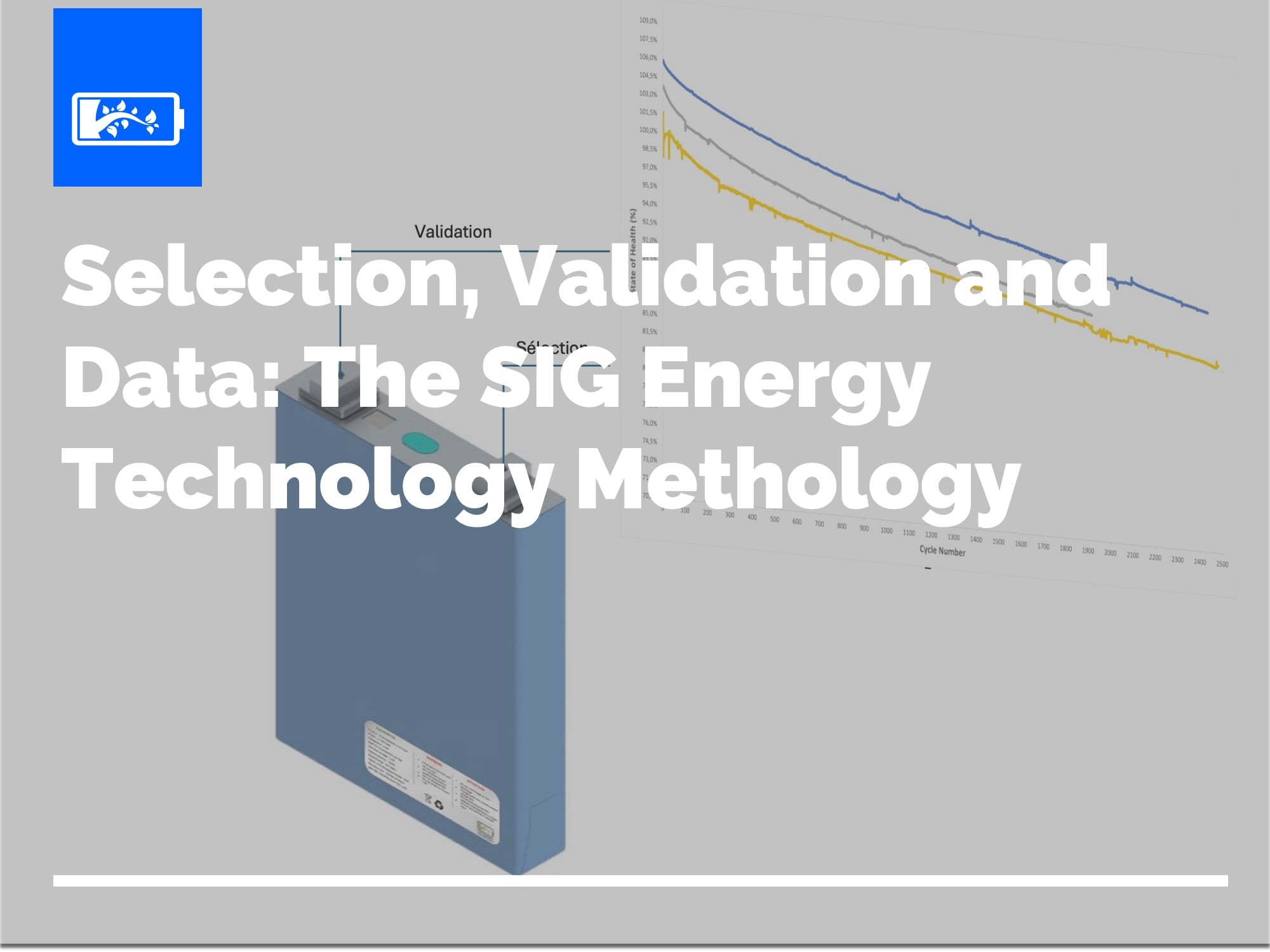
Intensive Cycling: Long-term charge and discharge tests (ranging from 1 month to 2 years) to measure the real lifespan of the cells (especially for technologies claiming over 4,000 cycles).
3. The Power of Data: 1,000 Tests, 200 References
This scientific approach now feeds a unique database. Our teams have conducted more than 1,000 in-depth tests on over 200 different cell references. This comprehensive market overview allows us to precisely compare market performance and secure technical choices during module development.